
Kerala now has several academies running structured, BIM ready programmes with academic and industry ties, so anyone choosing a BIM course in Kerala is usually picking between structured options rather than between structure and chaos. That changes which questions matter. This guide sets out how to compare structured programmes on sequencing, prerequisites, progression and credentials, using the AECIX academy catalogue as a worked example. Course structures change, so treat this as a framework for your own checks rather than a specification, and confirm details with any provider directly before deciding.
Key Takeaways
When every option on your shortlist is structured, the decision turns on sequencing, prerequisites and schedule rather than on whether structure exists. Ask about the route beyond the first course. A catalogue behind the course you are buying means you are buying a path rather than a one-off purchase. Four verifiable questions discriminate between providers better than any brochure, and they are the only comparison you can genuinely trust.
When Every Option Is Structured
Most advice on choosing a course implicitly contrasts a structured provider with an unstructured one, which makes the writing easy and the conclusion obvious. That is rarely the real situation, and pretending otherwise is useless to anybody actually deciding. When the providers you are considering all run defined programmes with real teaching, the differences move to second order questions: how the levels sequence, whether prerequisites gate enrolment, what happens after the first course and how the calendar is set. Those sound minor and they determine outcomes. This is good news for a learner, because second order questions have concrete answers. You cannot meaningfully compare two syllabi as an outsider. You can absolutely compare answers to the question of who opens the file you submit in week three. It also means brand recognition is a poor tiebreaker. Between structured providers, the one that fits your schedule and places you at the correct level will produce the better outcome regardless of which name you heard first. That is worth saying plainly, because search results and advertising spend are not quality signals, and in a market where the buyer cannot assess the product they do a great deal of the deciding by default. The counterweight is a short list of questions you ask everybody, which is what the rest of this guide is.
How a Well-Sequenced BIM Catalogue Works: The AECIX Example
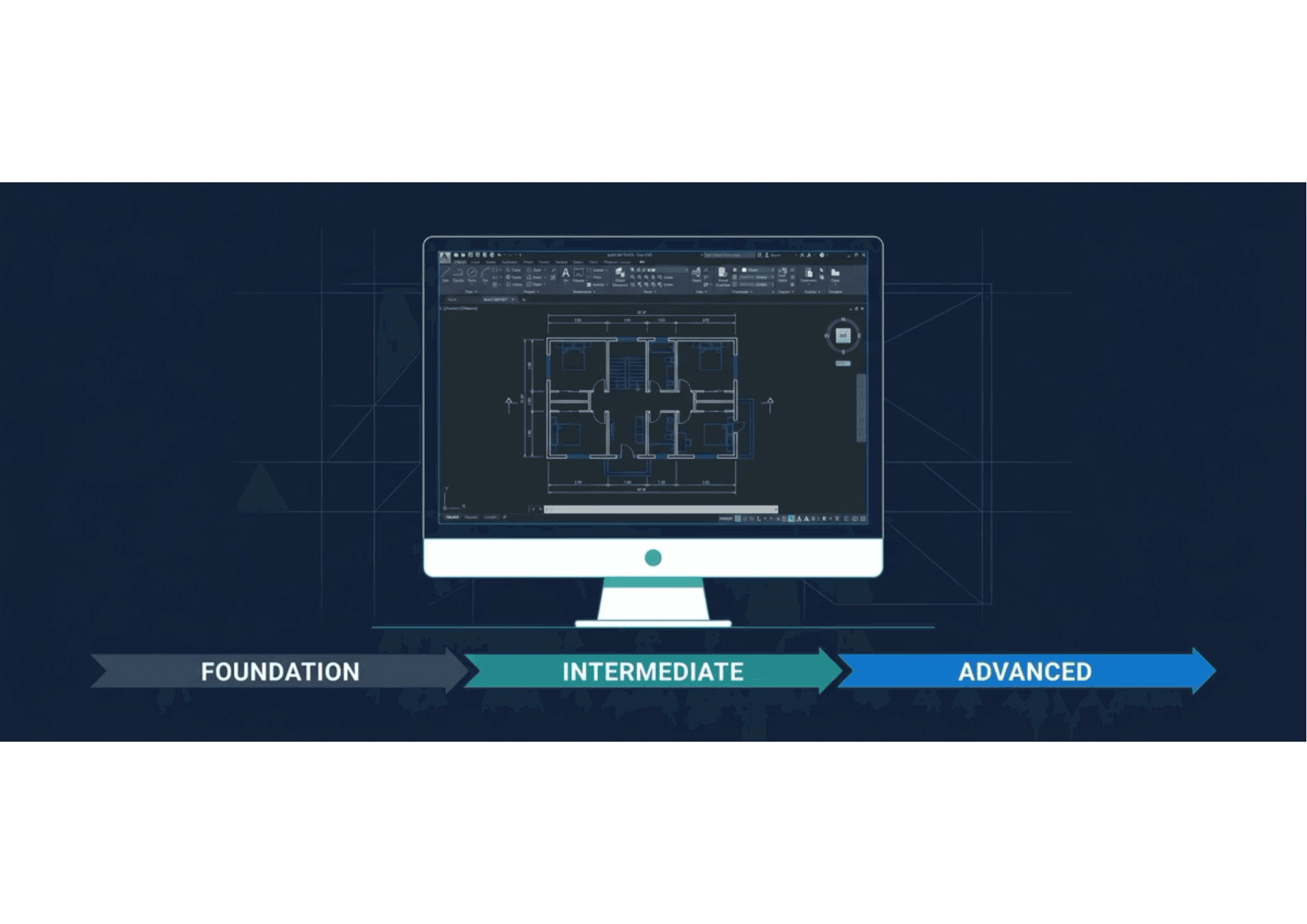
AECIX organises courses into three levels with prerequisites rather than as a flat list. Foundation covers BIM Fundamentals and AutoCAD Essentials. Professional covers the Revit tracks, including Revit Architecture and Revit Civil. Specialist covers Navisworks, Navisworks Manage and ISO 19650. The levels gate enrolment rather than merely labelling difficulty, which is the part that matters. A provider willing to tell an applicant they should start lower has made the sale smaller and slower, and that willingness is a reasonable proxy for whether they are optimising for your outcome. Alongside the software catalogue sit five career track programmes named for job titles rather than tools, covering BIM modelling, AI for AEC, 3D coordination, digital twin analysis and marketing coordination. Two signature programmes sit outside the catalogue entirely. Delivery is live cohort rather than recorded, on fixed intake dates scheduled around work and study commitments. AECIX is an Autodesk Authorised Learning Partner and an Autodesk Authorised Training Center, which is independently verifiable rather than self declared. What that structure buys a learner is fewer decisions. Once you are placed correctly, the next course is implied rather than researched, and the eighteen month plan exists rather than being reassembled every time one course ends. For anybody fitting study around a job, removing those decision points matters more than it sounds.
The Question About What Comes After
Ask what happens when the course you are buying finishes. It is the question people least often think to ask, and it changes the value of the purchase considerably. If the answer is a defined next course with stated prerequisites, you are buying entry to a path. Your second decision is already made, the provider knows what you can do, and the sequencing was designed rather than assembled. That is worth a great deal over eighteen months. If the answer is that the course is complete in itself, you will be making the same provider decision again in six months, with a little more knowledge and the same amount of marketing to filter. That is not a fault, but it is a cost worth pricing in. The related question is whether the provider will tell you honestly when you are done with them. A catalogue that has an end, with a clear statement that further progression happens on projects rather than in courses, is a sign of a provider that is not simply selling the next thing indefinitely. Ask it as a specific question rather than in the abstract: if I finish the course you are recommending, what would you suggest next, and what after that? A provider with a designed sequence answers immediately. One assembling a path on the call will hesitate, and the hesitation is the information.
Partnerships, Credentials and What They Signal
Training providers reference a range of partnerships and affiliations, academic and industry, and they vary widely in what they actually confer. It is worth separating the kinds rather than treating them as one category of credibility. Vendor authorisation is the most concrete, because it is an assessment against a defined standard by an organisation with no interest in your enrolment, and it is verifiable directly with the vendor. Autodesk publishes its own certification framework for exactly this reason. Academic and industry association affiliations vary more. Some confer curriculum review or recognised assessment, others are membership. Both can be legitimate and they carry different weight, so the useful question is what the affiliation actually gives a student rather than that it exists. A professional certification from any source is ultimately a signal about process rather than about you, which is why it matters most when you have no work history and recedes quickly once you do. Weight it accordingly when choosing. The practical consequence is that credentials should be a filter rather than a ranking. Use them to remove providers who cannot substantiate what they claim, then decide between the remainder on process questions. Ranking credentialed providers by whose affiliations sound more impressive is an exercise with no reliable answer.
Making the Decision on Your BIM Course in Kerala
Ask every provider on your shortlist the same four questions in the same words. Who reviews the work I submit? What will I have produced by the final session? What are the prerequisites for the level you are recommending? When do sessions genuinely run, and what proportion of learners complete? Then check your own constraint honestly. For most working professionals the binding constraint is hours available and session timing, and the programme that fits it will beat a more impressive programme that does not, every time, because a course you do not finish teaches nothing. Attend a free session where possible and ask a specific question about your own situation. How that is handled predicts the teaching experience better than any written material, and it costs nothing except a moment of mild discomfort. Verify the checkable claims independently rather than relying on any article written at a point in time, including this one. An academic counsellor will give you a current answer for AECIX, and the same conversation elsewhere will do the same for other options.
Conclusion
When every option is structured, choosing a BIM course in Kerala comes down to sequencing, prerequisites, what comes after the first course and whether the calendar fits your life. Those all have concrete answers, unlike syllabus quality, which you cannot assess from outside. Ask the same four questions everywhere, verify authorisation claims yourself, and let the answers decide, with the AECIX course catalogue as a useful benchmark for what a sequenced path looks like.
FAQ
Q1: How do I compare structured BIM courses?
On sequencing, prerequisites, what comes after the first course and actual session timing. Syllabus quality cannot be assessed from outside, but all four of those have concrete answers you can collect in a couple of phone calls and write down.
Q2: Why do prerequisites matter so much?
Because a provider willing to place you lower has made the sale smaller and slower, which is a reasonable proxy for whether they optimise for outcomes. Students placed above their level frequently conclude they lack ability instead.
Q3: What should I ask about what happens after the course?
Whether there is a defined next course with stated prerequisites. If yes, you are buying entry to a path. If the course is complete in itself, you will make the same provider decision again within about six months.
Q4: Do academic partnerships mean much?
They vary widely in substance. Some confer curriculum review or recognised assessment, others are essentially membership. The useful question is what the affiliation actually gives a student, rather than simply whether one exists at all.
Q5: Is vendor authorisation better than a partnership?
It is more concrete, because it is an assessment against a defined standard by an organisation with no interest in your enrolment, and you can verify it directly with the vendor rather than through the provider claiming it.
Q6: Should brand recognition decide it?
No. Between structured providers, the one that fits your schedule and places you at the correct level produces the better outcome regardless of which name you happened to encounter first in advertising or search results.
Q7: How much does location matter for online courses?
Less than it once did, though Kerala rooted providers often have stronger local employer relationships. If you intend to work in the region specifically, that network can matter more than the delivery format itself does.
Q8: Where can I see the AECIX levels and prerequisites?
The signature programmes page covers the two specialised tracks, and the AECIX blog hub carries longer explainers on how the sequence works and on what each stage assumes you can already produce unsupervised before enrolling.